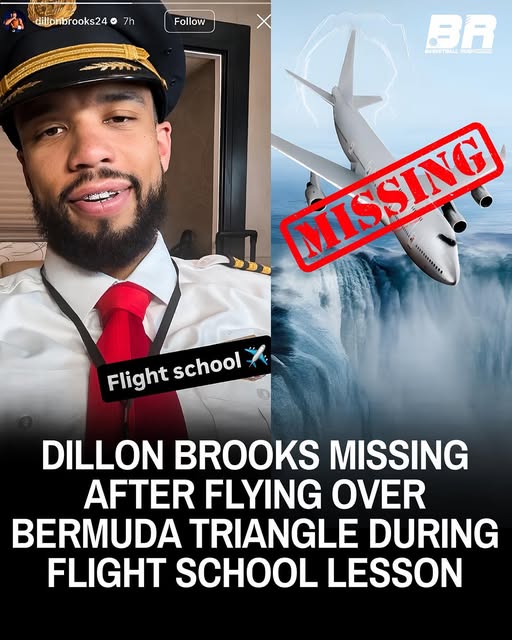
Social media users and basketball fans have recently been confronted with a viral claim alleging that professional basketball player Dillon Brooks had gone missing following a flight over the Bermuda Triangle during a flight school lesson. The story quickly gained attention online, prompting confusion, concern, and widespread speculation. However, as of this writing, there is no verified evidence supporting the claim, and no credible authority has confirmed that Brooks is missing or involved in any aviation-related incident.
The rumor appears to have originated from unverified online posts that combined a recognizable public figure with one of the world’s most enduring mysteries—the Bermuda Triangle. Such stories often gain momentum on social media platforms because they blend elements of celebrity culture, mystery, and sensational storytelling. As a result, many users shared the claim before confirming whether any factual basis existed.
Despite the growing attention the story has received, no official statements have been issued by Dillon Brooks, his representatives, his team, the National Basketball Association, aviation authorities, or law enforcement agencies indicating that he is missing. Likewise, no reputable news organizations have reported a disappearance, aviation accident, or investigation involving the NBA player.
The absence of official confirmation is significant. In situations involving public figures, especially professional athletes with substantial public visibility, legitimate incidents typically generate immediate responses from teams, agents, family representatives, or relevant authorities. In this case, no such responses have emerged to support the claims circulating online.
The rumor has also drawn attention because it references the Bermuda Triangle, a region of the Atlantic Ocean long associated with legends involving unexplained disappearances of ships and aircraft. For decades, books, television programs, movies, and internet discussions have contributed to the mystique surrounding the area. While the Bermuda Triangle remains a popular subject in popular culture, experts generally agree that many of the extraordinary claims associated with it have been exaggerated or lack scientific support.
Modern analyses of maritime and aviation data have found no evidence that the region experiences unusual numbers of disappearances when compared to other heavily traveled areas of the ocean. Nevertheless, the legend continues to capture public imagination, making it a frequent backdrop for viral stories and internet hoaxes.
The Dillon Brooks rumor appears to fit this familiar pattern. By combining a well-known athlete with a mysterious setting, the story gained traction among users who may not have immediately questioned its authenticity. However, viral popularity should never be mistaken for credibility. The speed with which information spreads online often exceeds the speed at which facts can be verified.
This incident serves as another reminder of the importance of media literacy in the digital age. Social media platforms have made it easier than ever for information to reach large audiences, but they have also created environments where misinformation can spread rapidly. Sensational claims, particularly those involving celebrities or unusual circumstances, often attract attention regardless of whether supporting evidence exists.
Experts frequently advise readers to evaluate the source of information before accepting or sharing it. Questions such as whether the report comes from a reputable news outlet, whether authorities have confirmed the information, and whether multiple independent sources have verified the claim can help distinguish fact from fiction.
For fans of Dillon Brooks, the current evidence suggests there is no reason for alarm. No official missing person report involving the athlete has been announced publicly, and there is no indication of any active investigation related to the claims circulating online. Until verified information emerges from authoritative sources, the story should be regarded as an unsubstantiated rumor rather than a factual news report.
The situation also highlights the potential consequences of spreading unverified information. False reports involving public figures can create unnecessary distress for families, friends, teammates, and supporters. They can also divert attention from genuine emergencies and contribute to broader public distrust of online information.
As discussions continue across social media platforms, readers are encouraged to approach sensational claims with caution and patience. Responsible information sharing begins with verification and a willingness to wait for confirmed facts before drawing conclusions.
At present, there is no credible evidence indicating that Dillon Brooks is missing, endangered, or involved in any aviation incident. Until an official statement is released by Brooks, his representatives, or relevant authorities, the viral Bermuda Triangle story should be treated as misinformation rather than a verified event. Fans and members of the public are encouraged to rely on established news organizations and official channels for accurate updates should any legitimate developments occur.